
The complete guide
Choosing a Compact Espresso Machine for Home or Office
A coffee setup that fits your routine
Making espresso at home can feel like a choice between convenience and control. You may want a quick morning coffee, but still enjoy choosing your grounds and preparing your own milk. A large machine can also take more counter space than you want to give up.
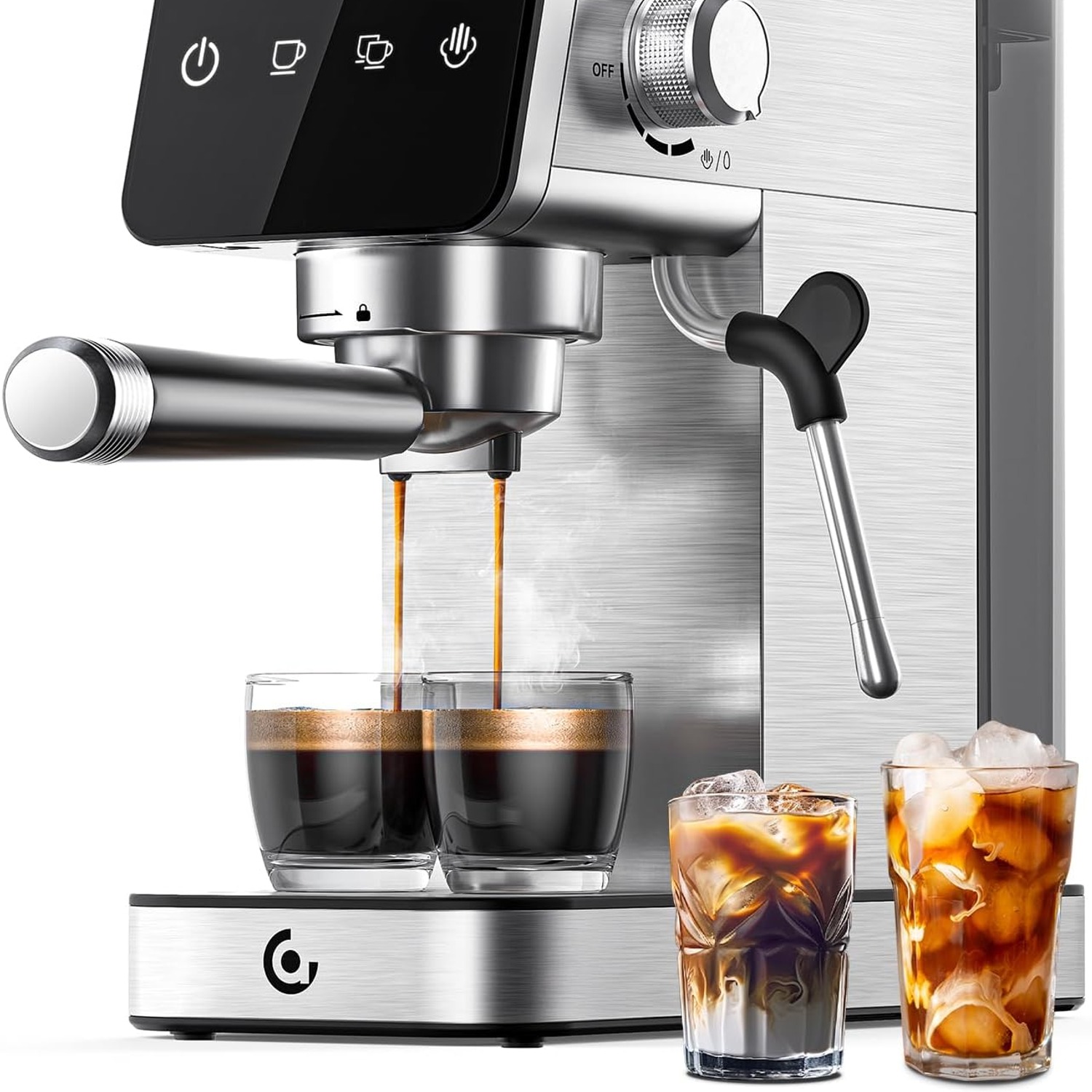
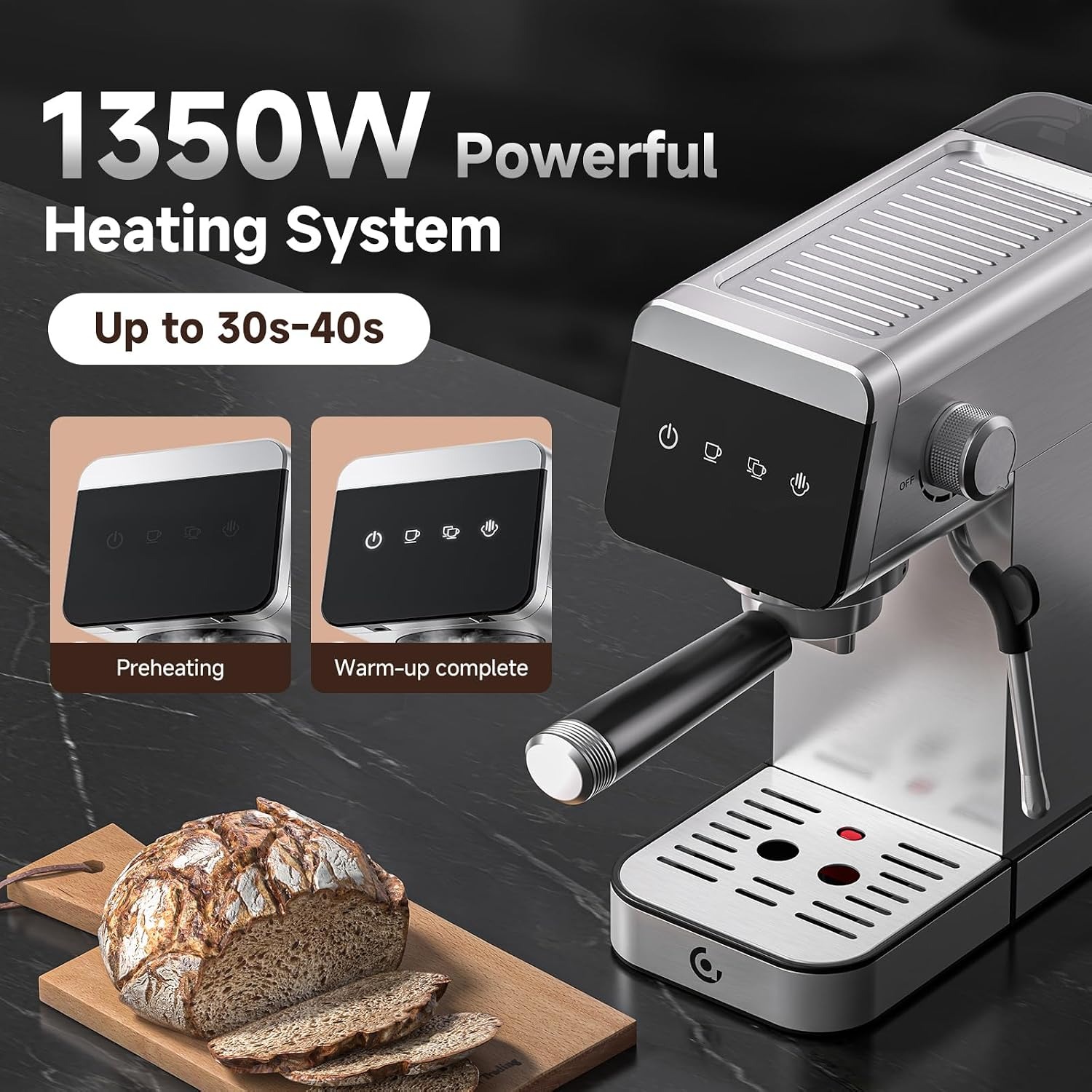
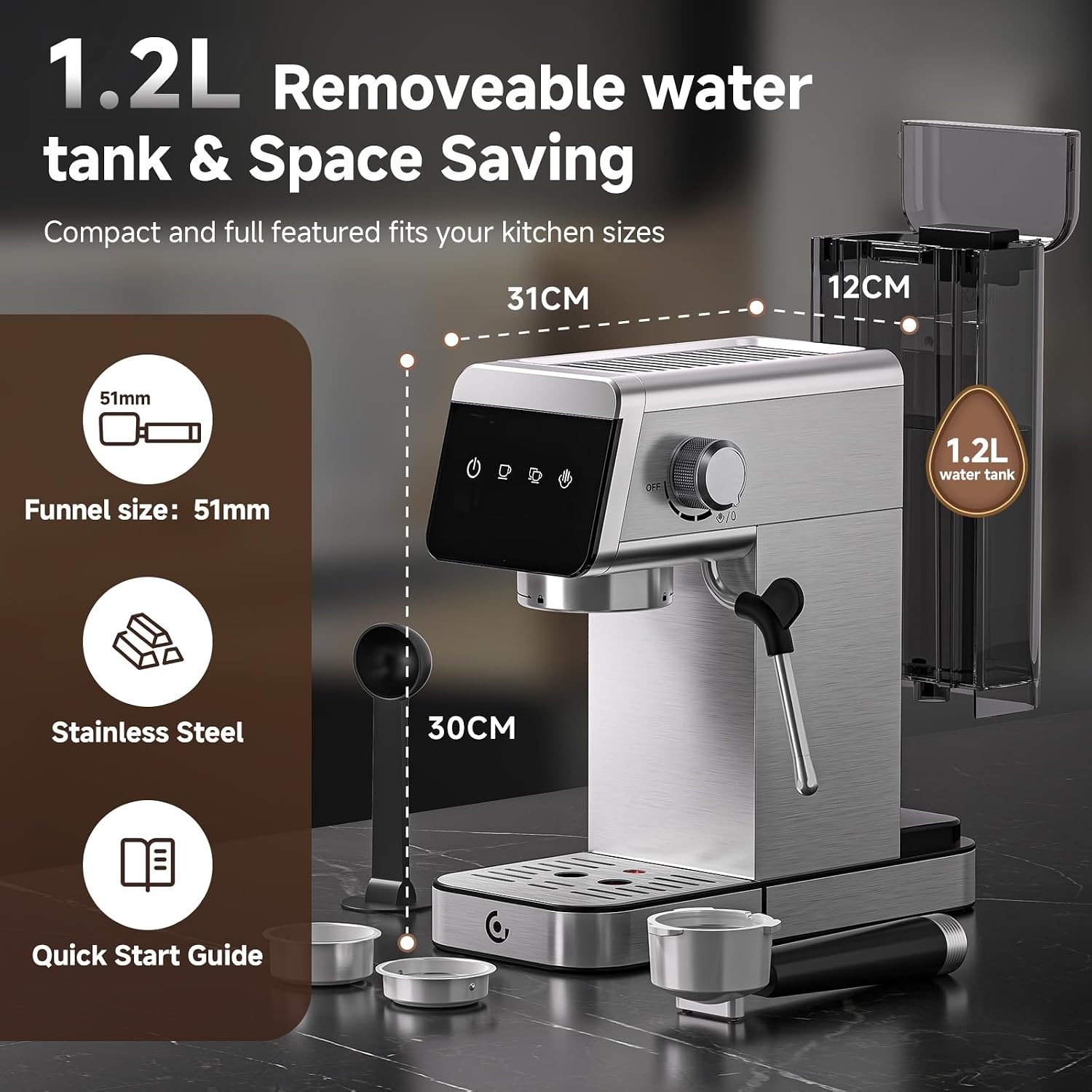
This compact espresso machine brings together ground-coffee brewing, touch controls and a steam wand. Its 1350W heating system has a listed warm-up time of 30-40 seconds. A removable 1.2 L water tank gives you a defined capacity without needing a fixed water connection.
The key question is whether its way of making coffee suits you. This is a portafilter setup, so there is some hands-on work. Before buying, think about the drinks you make, the space you have and how much cleaning you are happy to do.
Understand the brewing process
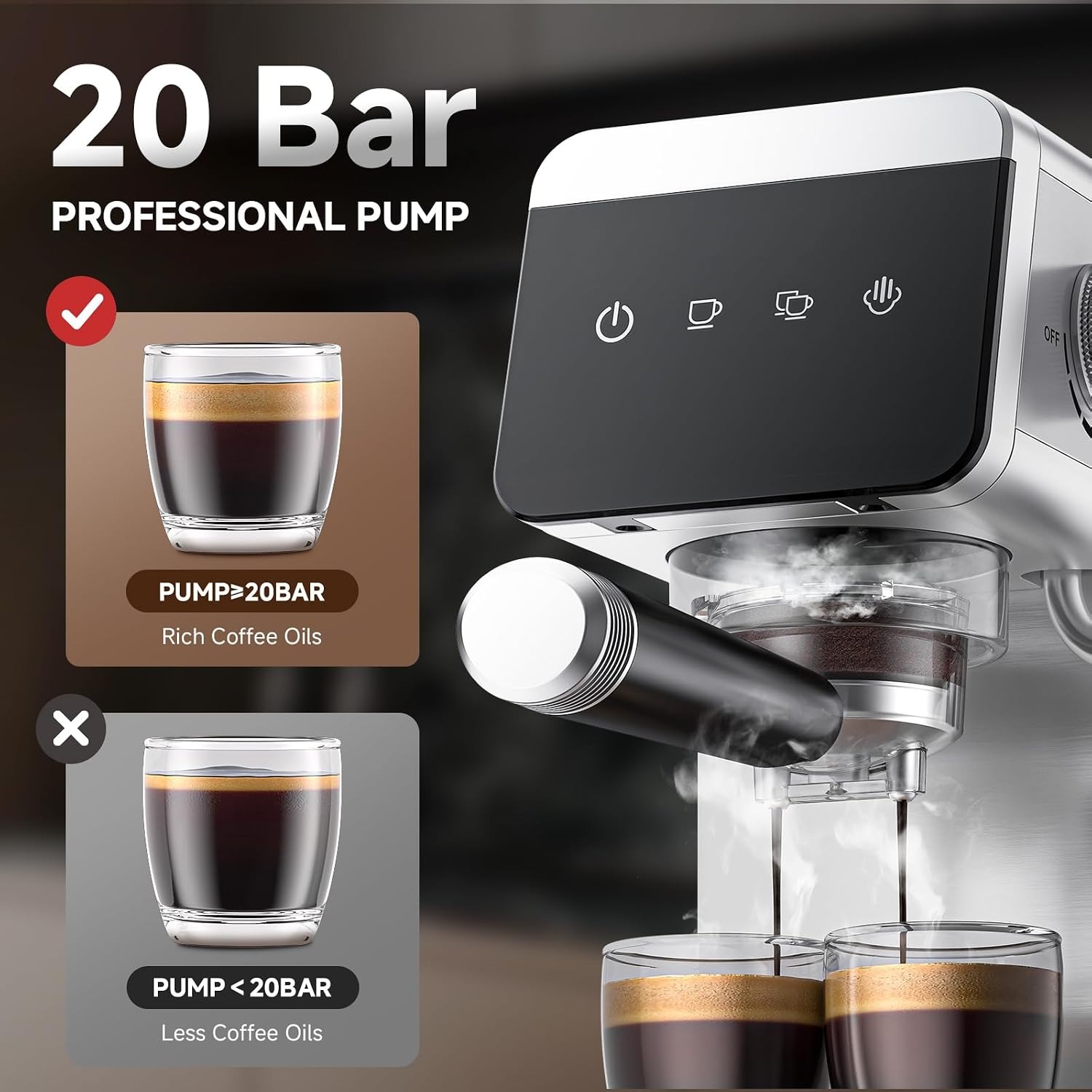
An espresso machine passes heated water through prepared coffee grounds. Here, the listed pressure system is a 20 bar Italian pump. That is a pump specification, not a promise that every cup will taste the same or suit every coffee.
Your grounds and preparation matter too. The grind, amount of coffee and way you tamp it can change how water flows through the filter. Freshness and your chosen beans also affect taste. A higher pressure number is not a substitute for getting those basics right.
This ground coffee machine includes a portafilter, brewing filter options and a tamper with spoon. You fill and prepare the filter before brewing. If you enjoy a small daily ritual, that can be part of the appeal. If you want to press one button without handling grounds, look closely at the workflow before deciding.
What the fast warm-up means
The listed 30-40 second warm-up is useful when you do not want a long wait before starting. It refers to the heating system, though, rather than the full time from an empty counter to a finished latte.
You still need water in the tank, coffee in the filter and a cup in place. Milk drinks also involve a separate frothing step. Keeping your coffee and tools nearby can make that routine easier without crowding the working area.
Follow the supplied instructions for readiness indicators and any preparation needed before the first drink. Do not assume that a warm-up figure means every part, including your cup, is already warm. A short, repeatable routine is more useful than rushing each step.
Choose between fixed and DIY modes
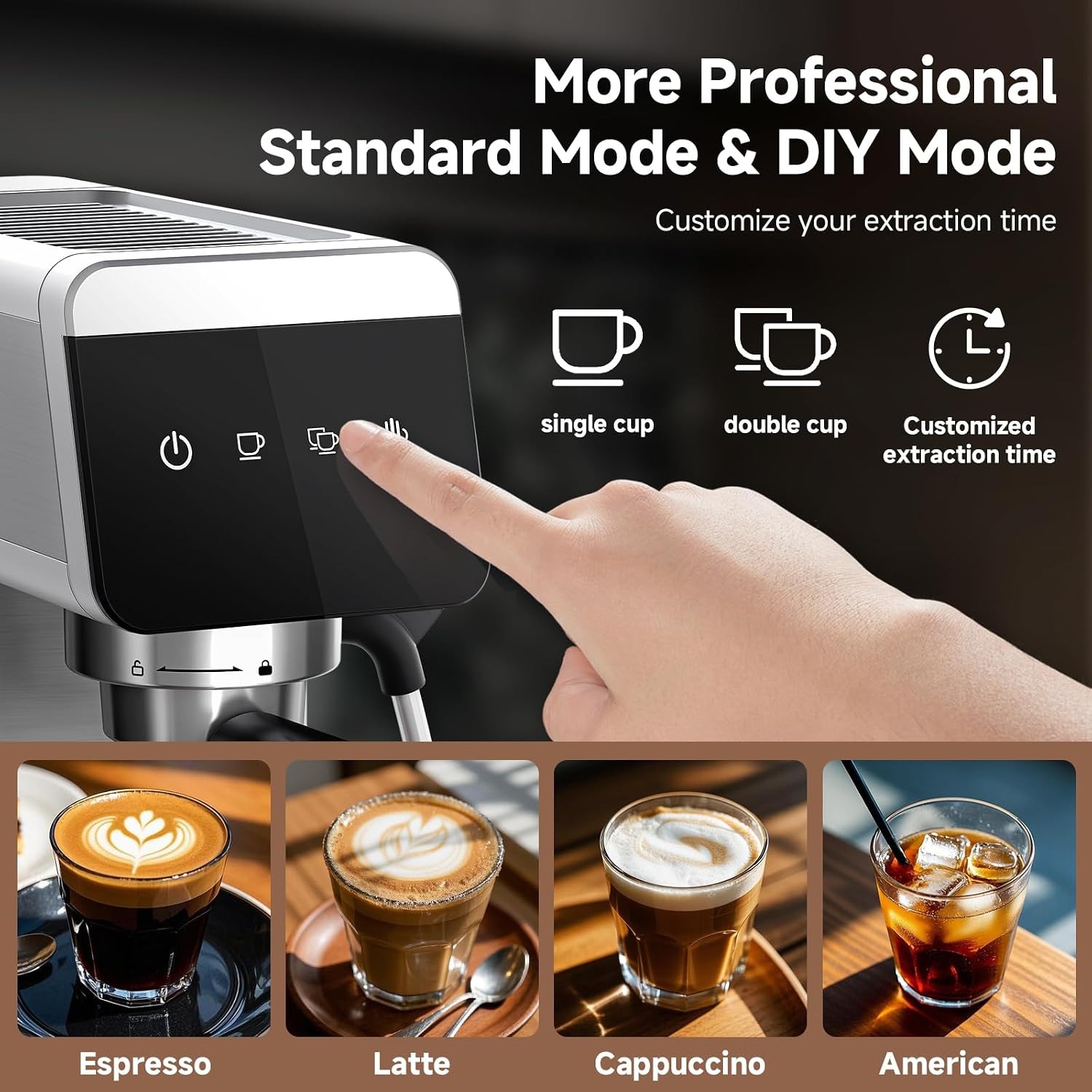
The machine offers fixed mode and DIY mode, with single and double cup selections on the LED touchscreen. Fixed mode gives you a starting point when you want to keep the routine simple.
DIY mode allows extraction time to be adjusted. This gives you another way to explore your preferred cup, but it does not remove the need to prepare the grounds well. Change one part of your process at a time so you can tell what made the difference.
An adjustable extraction espresso machine may appeal if you like learning through small changes. Start with the manual's directions, keep your coffee preparation steady, and taste the results. There is no need to change every setting with each drink.
The maker does not give exact adjustment limits, so check the instructions rather than assuming a particular range.
Decide how much milk preparation you want
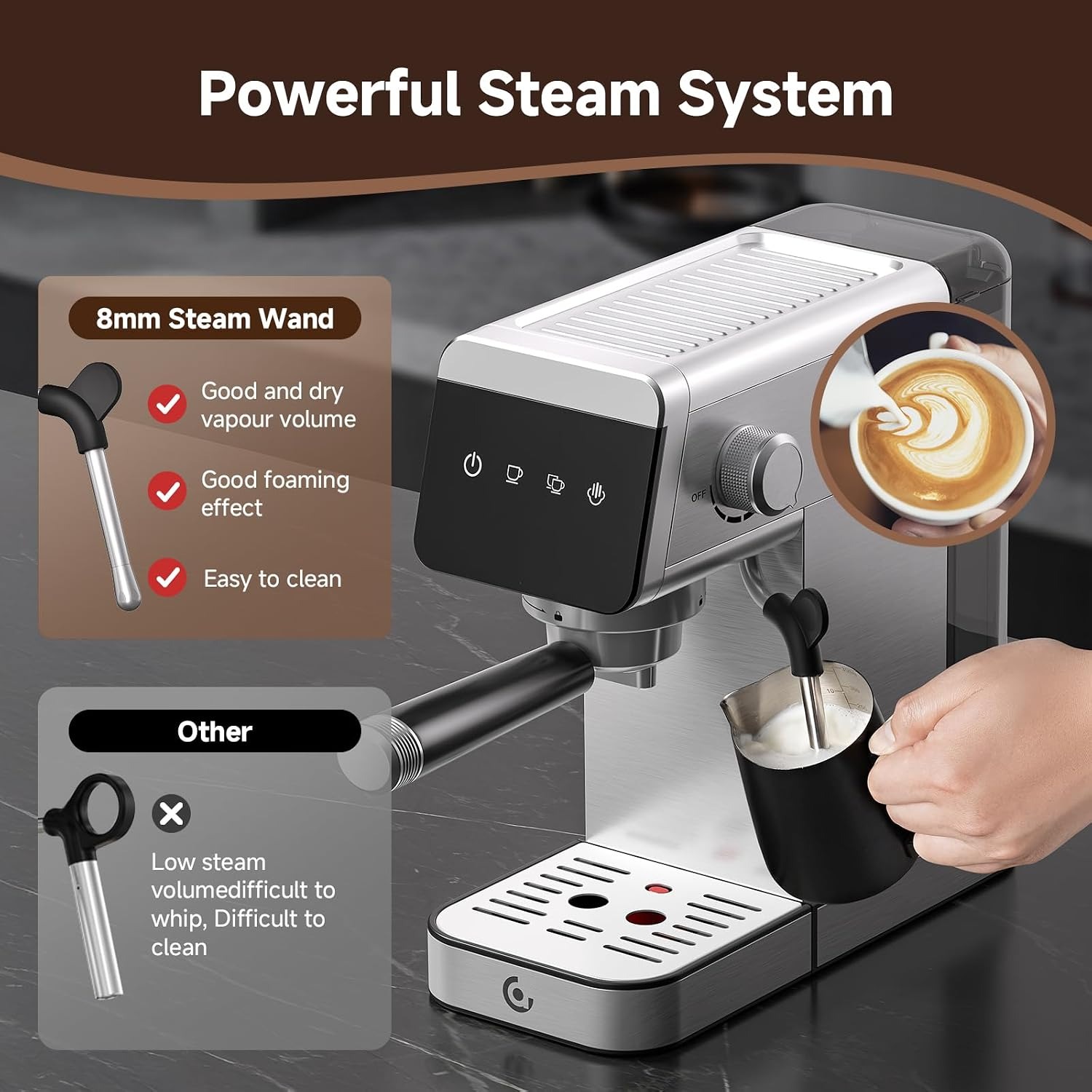
An espresso machine with steam wand gives you a way to prepare milk for lattes, cappuccinos and flat whites. This model has an adjustable wand, with milk frothing done by hand.
That is different from a machine with a built-in milk container and one-touch drink recipes. You will need to handle the milk and learn the wand's controls. The supplied accessories do not list a milk jug, so check what you need before your first milk drink.
Allow time to practise. Milk texture depends on technique as well as the equipment, and the first attempt may not look like a café drink. Start by learning safe handling and basic frothing before focusing on patterns in the cup.
Cleaning is part of this choice. Milk residue should be dealt with after use according to the manual, rather than left until the end of the day.
Measure the whole working area
The listed dimensions are 18.5 cm deep, 33 cm wide and 43 cm high. Use those figures to check your counter rather than relying on the word compact or judging the machine from photographs.
A useful check is to mark out its footprint with paper. Then imagine using the portafilter, reaching the controls and positioning a cup. Leave space for milk preparation if that is part of your routine.
Height matters beneath cupboards. The machine may fit in the gap while still being awkward to refill or clean. The maker does not state a required clearance, so allow practical access rather than planning a tight fit.
For a shared kitchen, also think about where the used grounds and damp accessories will go. A tidy setup needs a little working space around the machine, not just room for the appliance itself.
Check materials and power before ordering
There is an important difference within the maker's details. The heading uses stainless wording, while the detailed specification lists plastic as the material and matte silver as the colour.
Treat that as a limit in the available information. It does not confirm a stainless steel body. If body construction is a deciding factor, ask for clarification rather than buying on the strength of the heading alone.
Electrical details also deserve a check. The listed power source is an AC adapter and the heating power is 1350W, but voltage and plug type are not specified by the maker. Confirm compatibility with your destination before ordering.
The same care applies to accessories. Filter size and replacement-part compatibility are not listed, so avoid buying extra baskets or portafilters based only on how they look.
Who this machine may suit
As a home espresso machine, this model may suit someone who wants to use grounds and prepare both espresso and milk drinks. The included tamper and brewing parts provide the basic listed tools, while fixed mode offers a place to begin.
It may also suit someone moving from simpler coffee preparation who wants more involvement. You can work on a consistent routine first, then explore extraction time and milk texture at your own pace.
Office use is listed, but that does not establish suitability for a busy café or a large team. There is no stated daily drink capacity. In a shared office, agree on refilling, emptying grounds and cleaning the wand so those tasks do not fall to one person.
If your priority is fully hands-off drinks, this setup may ask more of you than you want.
Plan refills and everyday care
A coffee machine with removable water tank can be easier to refill because the tank can be taken to the water source. This one holds 1.2 L. The number of drinks between refills depends on serving sizes and water used during cleaning.
Use the manual for filling and fitting the tank. Do not guess at minimum levels or run the machine without following its water requirements.
For cleaning, switch off, unplug and let the machine cool where the instructions require it. Wipe the outside with a soft damp cloth and avoid abrasive cleaners. Never immerse the appliance.
The specification says it is not dishwasher safe. Do not assume that removable parts can go in the dishwasher either. Follow their separate care directions, and use the manual's advice for descaling. Water conditions vary, so a fixed cleaning schedule should not be invented from the tank size or wattage.
Compare the purchase, not just the machine
When choosing the best compact espresso machine for your needs, compare the whole setup. Consider whether you already have suitable grounds, whether you need a grinder, and whether milk drinks will require an extra jug.
Check delivery estimates for your location and read the returns policy before ordering. It is better to settle those questions before unpacking or using coffee equipment.
For a gift, make sure the recipient actually wants a hands-on machine. Counter space, local power requirements and their preferred coffee format matter more than choosing an appliance that simply looks right.
The short version
This machine combines a 1350W heating system, a listed 30-40 second warm-up, fixed and DIY modes, and an adjustable steam wand. It uses ground coffee and includes the main listed brewing tools.
Choose it for a hands-on espresso routine with milk frothing available. Before ordering, confirm electrical compatibility, measure the working space and note that the detailed material specification lists plastic, not a confirmed stainless steel body.